 0481 569 566
Driveway resurfacing
Driveway Resurfacing
If your driveway looks worn out but the concrete underneath is still worth keeping, resurfacing may give you a new surface without starting again with a new slab. The important part is making sure the existing driveway is actually suitable first.
The New Surface Is Only as Good as the Driveway Underneath It
A driveway can look pretty ordinary without necessarily being beyond saving.
Fading, surface wear, old finishes and localised damage can make an otherwise usable driveway look much worse than it really is.
But resurfacing isn't about hiding whatever is already there. Before a new surface goes over the driveway, we need to know whether the concrete underneath is actually worth keeping.
What Resurfacing Can — and Can't — Do
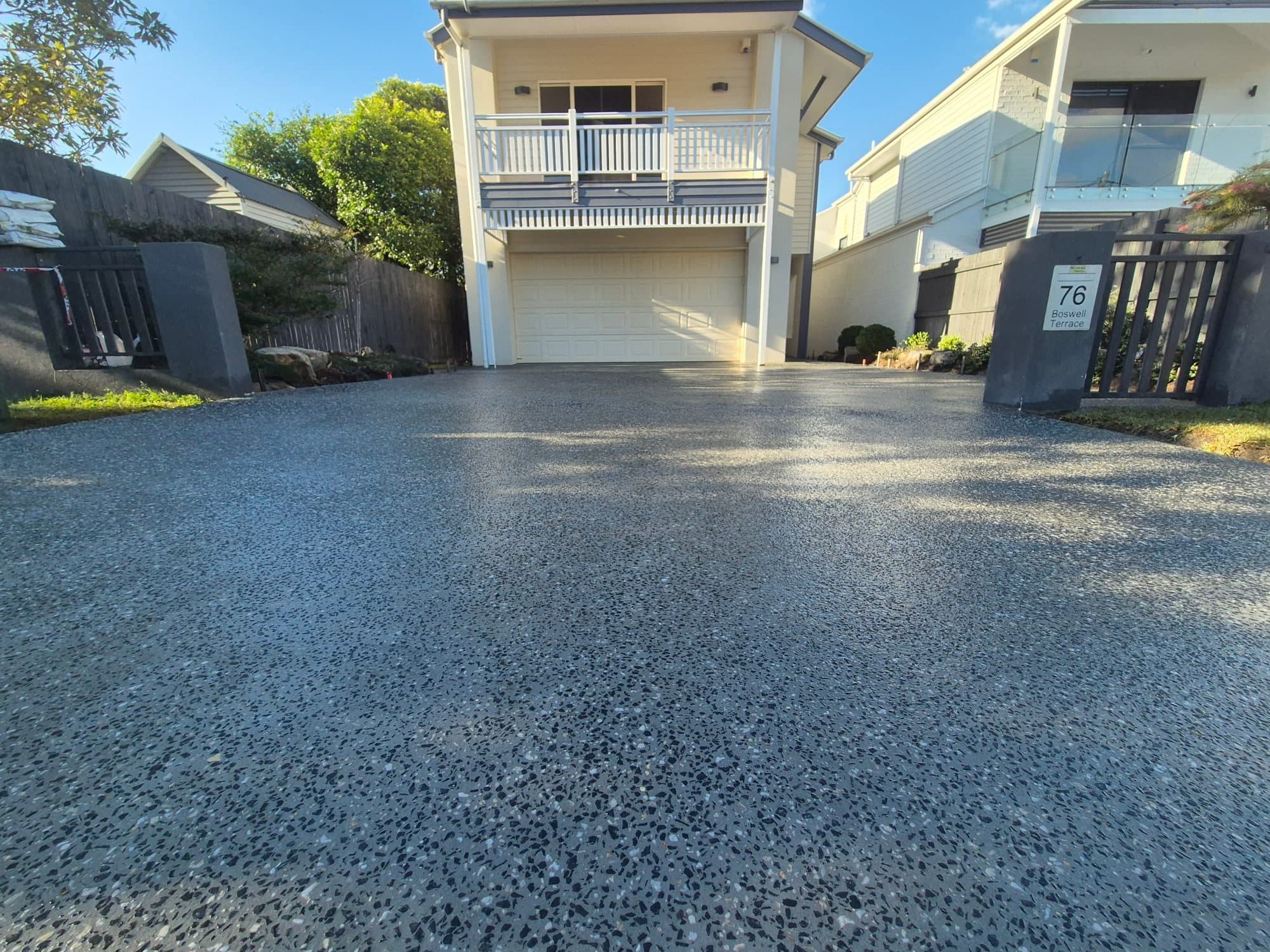
Resurfacing puts a new finish over properly prepared existing concrete. It can change the colour, texture and overall appearance of a driveway without removing a slab that's still suitable to keep.
What it can't do is make problems underneath the concrete disappear.
Cracks and damaged areas need to be looked at first. If the slab is moving, badly deteriorated or has another underlying problem, putting a new surface over it doesn't fix what's happening underneath.
That's why the condition of the existing driveway matters more than how tired it looks.
Is Your Driveway Suitable for Resurfacing?
May Be Worth Considering
- The existing slab appears stable and serviceable
- The main problem is a worn, faded or dated surface
- Localised damage can be dealt with during preparation
- You want to change the colour or texture of the existing concrete
- The driveway is worth keeping but the surface needs more than cleaning or resealing
Resurfacing May Not Be the Answer
- Sections of the slab are moving or badly sunken
- Cracking suggests ongoing movement
- Concrete is extensively breaking down
- There's a significant underlying problem that surface work won't address
You don't need to diagnose this yourself. Andre can look at the driveway and tell you whether resurfacing is worth considering or whether something else makes more sense.
What Happens Before a Driveway Is Resurfaced?
01
Assess
First we look at the existing driveway — not just the surface, but the cracks, damaged areas and anything that suggests the slab may be moving.
02
Prepare
If resurfacing makes sense, the existing surface needs to be properly prepared for the new finish. What that involves depends on what's already on the concrete and what condition it's in.
03
Repair
Cracks and damaged areas that need attention are dealt with before the new surface goes over them. A repair can deal with existing damage, but it can't guarantee the slab will never move again.
04
Resurface
The new finish is applied over the prepared driveway to change the appearance and surface texture.
05
Finish
The resurfaced driveway is finished with the appropriate treatment for the resurfacing system being used.
Resurfacing Isn't a Reset Button
A new surface can make a dramatic difference to a tired driveway, but the concrete underneath still matters.
Existing repairs may influence the finished result. Movement in the slab can affect a new surface later. And resurfacing doesn't turn damaged concrete into a brand-new slab underneath.
The best results start with a driveway that's genuinely suitable for resurfacing — which is why we'd rather assess it properly before promising what a new finish will achieve.
Related services
- Driveways
- Concrete Resurfacing
- Concrete Restoration
- Concrete Repairs
- Concrete Cleaning & Sealing
- Concrete Resealing
Related problems
Driveway Resurfacing FAQs
Not Sure Whether It's Worth Resurfacing?
Send Andre a few photos of the driveway. We can start by looking at what you've got and whether resurfacing is actually worth considering.